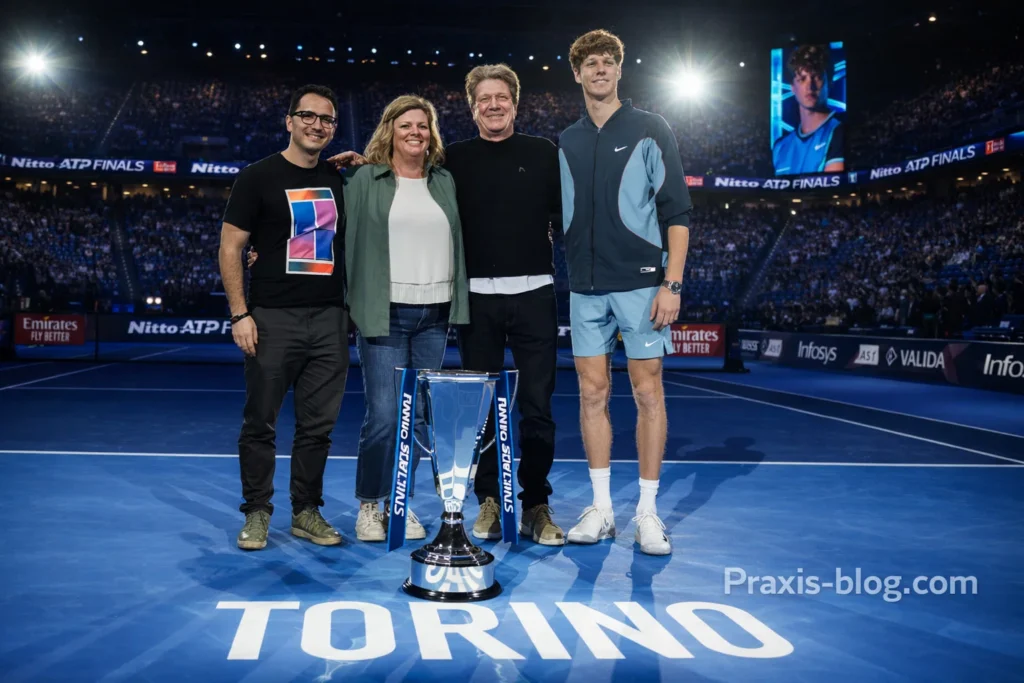
When world‑class athletes rise to prominence, curiosity often follows not only about their achievements but also about the people who shaped them. In the case of Jannik Sinner, one of the most compelling parts of his journey to becoming a top‑ranked tennis player comes from his family roots especially detailed accounts of his father, Hanspeter (sometimes referred to as Johann) Sinner. While Jannik’s career and accolades have captured headlines, far less is documented about his father, who hails from humble beginnings and whose life, though private, has played a subtle role in Jannik’s success.
Early Life in South Tyrol
Hanspeter Sinner was born and raised in South Tyrol, a culturally rich mountainous region in northern Italy known for its Alpine landscape and strong Germanic heritage. This northern Italian region, once part of the Austro‑Hungarian Empire, remains predominantly German‑speaking and culturally distinct from many other parts of Italy a setting that shaped both Hanspeter’s identity and that of his son, Jannik.
Little information is publicly available about Hanspeter’s exact date of birth or early education, reflecting the family’s desire for privacy. Unlike his son, who has become a global sporting figure, Hanspeter’s pre‑family life did not unfold in the public eye. However, the cultural environment of South Tyrol combining disciplined mountain work, multilingual communication, and outdoor life would become part of the foundation that his children would grow up with.
Professional Life and Work Ethic
Rather than pursuing athletic competition or formal study in sports, Hanspeter built his life around the hospitality industry, specifically as a professional chef. For decades, he worked in the demanding setting of a ski lodge and mountain restaurant the Talschlusshütte Hut in Val Fiscalina (Val di Funes), a popular destination for hikers and skiers.
The life of a chef in this environment is defined by long hours, physical exertion, and exacting standards. Many reports explain that Hanspeter’s dedication extended for over 40 years, a career that involved not only crafting meals but instilling values like discipline, precision, and patience. These traits, although related to his cooking profession, also came to be seen by observers as part of the character framework he passed on to his children.
In later years, as Jannik’s career advanced, Hanspeter became involved in his son’s tennis life not as a coach but in a supportive role. He has occasionally joined Jannik’s touring team as a personal chef, providing meals that offered not just nutrition but a familiar sense of home while traveling around the world for tournaments. This role demonstrates the blend of parental support and professional skill that has characterized his involvement in Jannik’s adult life.
Family and Personal Life
Hanspeter is married to Siglinde Sinner, and together they raised two sons: Mark (also spelled Marc) and Jannik. Mark, the older brother, was adopted from Russia as an infant, and Jannik was born in 2001 in Innichen (San Candido) in South Tyrol.
Siglinde also worked in hospitality, reportedly as a waitress at the same ski lodge where Hanspeter served as chef. The couple later opened and operated their own guesthouse Haus Sinners in South Tyrol, allowing them to work together and remain anchored in their local community even as Jannik pursued a demanding athletic career.
Despite global attention on Jannik, Hanspeter and Siglinde have remained remarkably private figures, choosing to focus on family and work rather than fame. Their presence at Jannik’s matches has been selective, often influenced by logistical realities and professional commitments back home.
Parenting Philosophy and Support
One of the most widely shared aspects of Hanspeter’s influence is the freedom and support he and Siglinde offered Jannik in his early years of sports. Rather than imposing pressure to specialize early, the family allowed Jannik to explore a range of interests. As a child he played football, skied competitively, and only later committed to tennis full‑time.
Sports commentators and social news outlets have repeatedly emphasized that Jannik often credits his parents for letting him choose his path a key part of his emotional development and mental balance as an elite athlete. He has said publicly that he appreciated their non‑pressuring approach, which allowed him to pursue tennis without the stress that often comes from intense parent‑driven ambition.
While there are varied anecdotes shared in fan communities and sports coverage about disciplinary moments (such as Hanspeter enforcing consequences for childhood behavior), these stories simply add texture to the picture of a father and not to any broader narrative of disability.
Cultural Identity and Language
Another interesting facet of Hanspeter’s life is his cultural and linguistic identity as someone from South Tyrol. The region’s German‑speaking majority deeply influenced his family, which is why Jannik’s first language was German, even though he grew up in Italy. This dual cultural identity speaking German at home while navigating the Italian public world illustrates a unique blend of heritage that adds depth to both Hanspeter’s and Jannik’s personal histories.
This cultural context also shaped Jannik’s multilingualism: as he moved to young adult life in the tennis world, he developed Italian fluency and learned English, enabling him to engage internationally without losing his family’s linguistic heritage.
Public Image and Media Attention
Media attention toward Hanspeter has increased as Jannik’s star rose. Journalists and profiles often describe him as humble, hardworking, and supportive, and rarely, if ever, focus on him as a public celebrity. Instead, they emphasize his role in creating a stable and grounded home environment that allowed Jannik to thrive.
When Hanspeter appears publicly such as at high‑profile matches like Wimbledon and Grand Slam finals the coverage usually centers around pride, family unity, and the emotional impact of seeing a parent witness their child’s achievements. However, even in such moments, there is no credible reporting of any disability or impairment.
Legacy and Influence
While Hanspeter Sinner’s life may not be documented with the detail typically associated with public figures, his quiet influence on one of the world’s best tennis players is clear. His story underscores that championships and fame can be built as much on character and upbringing as on training and talent. The alpine discipline, work ethic from years of hospitality work, multilingual family environment, and supportive parenting philosophy have intertwined to provide a foundation for Jannik’s approach to both sport and life.
Although his name does not appear in ATP rankings or sporting histories as a competitor, Hanspeter’s value is expressed indirectly in the confidence, humility, and grounded emotional state of his son, a world‑class athlete who often highlights his parents’ positive, non‑pressured influence.
Conclusion
Hanspeter Sinner remains a figure whose importance is mostly felt through the success, philosophy, and personal values of his son, Jannik Sinner a four‑time Grand Slam champion and former world No. 1. Contrary to any rumors or misunderstandings online, there is no verified information or reliable documentation that Hanspeter Sinner has a disability. Instead, what emerges from research is the story of a devoted father, seasoned chef, multilingual family man, and private individual who chose work, family, and support over public life. His contributions to his son’s development are often recognized subtly in interviews, press conferences, and tennis features but they remain central to understanding the human story behind a global sporting icon.